Posts

The Director

Image
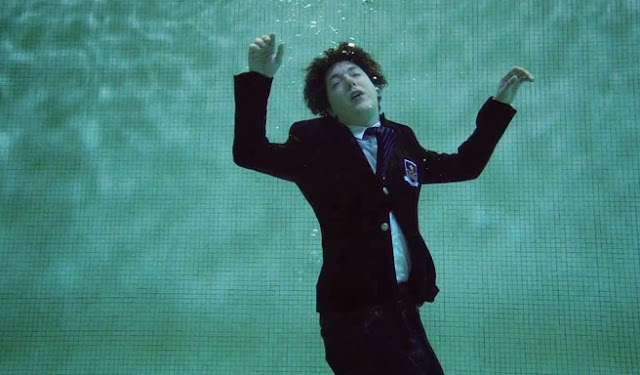
I wanted to learn more about the director of Me, Myself, and Mum , who also stars in the film as it was supposed to be autobiographical. At the age of 19 Guillaume Galliene became a comedian and began to get small theatre roles. His fame grew immensely as he gained a role in Sofia Coppola's Marie-Antoinette.  He specifically has focused on political movies from his work about the Algerian war to French presidential election films. His career really changed and became recognized when he created his one man show Me, Myself, and Mum , sometimes translated as The Boys and Guillaume. He received five Cesar awards and allowed him to receive many other notorious roles.

Female Gaze

Image
     In inspiration of the last two movies, I wanted to dive more into France's relationship with female directors.  According to The Guardian , a new movement has risen similar to New Wave Cinema. The author of the article wrote that "there is nothing unusual about French women film directors."  While various famous films have been directed by women, I would have to disagree with this statement.  Women directors have been praised, but throughout history, the recognition of female directors objectively has been less than of male directors. How many people know Godard versus Varda? Apart from that, the article talks about Alice Guy, the first female director. She directed her first film in 19896 at the age of 23. She went on to direct more than 600 films for Charlie Chaplin's film company and Warner Brothers. The writer explains how many female directors chose philosophical and oppose romantic comedies. The article also says that recent female directors ha...

Another Take

Image
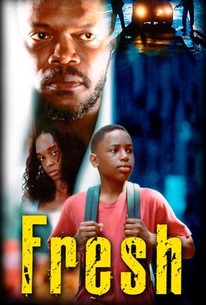
After watching La Haine and Girlhood , I was interested in other portrayals of the troubled French youth. When I researched other films of that category I came across a 1994 film called Fresh by director Boaz Yakin. The main character has very different mannerisms than the rowdy characters of La Haine .  The main character Fresh does not speak very much throughout the film, but only when he thinks his words add meaning to a situation. His dad is an alcoholic and his dad is a drug dealer. The closest father figure he has in his live is a drug dealer named Esteban. Throughout the film, he plays a series of chess games to free his sister and him from the control of their father.  Overall, the main character is more like Marieme in the sense that she often remains quiet until certain situations come up and the story overall is not as exaggerated as that of Vincent.

"Non" to Hollywood

Image
Film critic Robbie Collin describes director Jacques Audiard as anti-Hollywood in an article by The Telegraph. They sit on a balcony with a view of The French Rivera and talk about his new movie Rust and Bone (the article was written in 2012). The film follows the romance between a single dad who is trying to become a wrestler and a whale trainer who has just lost both of her legs. The title describes all of the physical and metaphorical violence throughout the film. "Rust and bone if the flavour of being punched in the face.  The blood filling the mouth, the splintered jaw.  When someone is punched in the face, you find out what they are made of," says Audiard when Collin asks him to explain the title. The film is based on short stories by a Canadian writer Craig Davidson.  However, in the stories the two main characters never fall in love or even meet. In the book, the trainer is a man who loses one leg, but Audiard wanted to change the story.  He explains ...

"L'argent, ou la femme aux cheveux gris. Relecture du dernier film de Robert Bresson"

Image
     I chose to read a small section from an academic paper by Raphael Picon for this week on Bresson's L'Argent . The article explains the great influence the Lumiere brothers had on Bresson. He wants to leave details out of the film in order for the audience to make assumptions. He refused to use actors to further develop this technique.  He asks complicated questions such as "What is the invisible dimension of the visible world?" and "What is the reality that cannot be captured?" These questions are what the author categorizes as Neo-Platonic questioning.      One of the most important aspects of the film is Bresson's ability to create a neutral reality within the plot by using mechanical phrases and monotone lines. The character and image transform into a formulaic pattern that also leaves room for elements of surprise throughout his films.

Bresson Interview

For this blog post, I have found an interview excerpt entitled "ROBERT BRESSON: ‘I’M NOT A DIRECTOR. I AM A FILMMAKER.’" from Bresson on Bresson- Interviews   (1943-1983).  In this interview, with François-Régis Bastide, Bresson comments on the way in which he films (apparently barely checking his shot-list during the filming of Pickpocket--which we saw excerpts of in class), his book Notes on the Cinematographer , and his many strict convictions on filmmaking. I found Bresson's comments on the use of sound within his films interesting as this absence of music, mentioned in the quotes below, was an entity I found myself reflecting upon a lot while watching L'argent . RB: Yes. In fact, I would very much like to rectify something that I missed in the past. I said, “No music except, of course, music played by visible instruments.” And I say that “sounds must become music.” What I mean is simply: “no phantom orchestras.” Which we see in films whenever there is music...

First American Documentary

Image
           Although this is a French cinema class, I wanted to inquire about the history of documentary films in the United States.  The first documentary film recorded was called Nanook of the North , created by director Robert Flaherty.  It follows an Inuit hunter who struggles to take care of his family during a Canadian winter. It is a black and white and silent film, with descriptions that describe the harsh conditions. Most of the movie is shot from the same angle while the people onscreen move.  For example, when a group of people are sledding away, instead of following the people down the slope, the camera stays at eye level in the same place as they disappear in the distance. The movie also employs long shots and cuts mainly to show dialogue or description.      Before Flaherty showed the movie, he accidentally dropped a cigarette onto the original camera negative. He then re shot the scenes because he had already ...

An Interview with Barbet Schroeder

Image
For this week's blog, I have found "An Interview with Barbet Schroeder" from 1966; originally published in  The Tulane Drama Review . We spoke about Schroeder in class this week as he was a producer on Rouch's  Cocorico Monsieur Poulet and was also a documentary filmmaker himself; we watched excerpts from his documentary, General Idi Amin Dada , in class as well. I find this interview interesting because of the context in which it is conducted, in the year 1966, and because of Schroeder's multiple references to Godard and the New Wave cinema, which we have also studied in class. Schroeder says of the relationship between the New Wave and documentary: "The New Wave people want to get back to the beginning. Godard looks to Chaplin, he is not opposed to the classics. We want to get back to the original purity of the movies, and documentaries are the essence of purity. We move from documentaries to realism to un- conventional things in realism…" S...

Truffaut

https://www.newyorker.com/culture/richard-brody/talking-about-truffaut Truffaut and Godard were in fact friends, but then they had a very public conflict as Godard is commonly known for. However, Truffaut and Godard are similar in that Truffaut also dreams of being a revolutionary in the world of cinema. He rejected French cinema and in particular French screenwriters. This is in true because of Truffaut's auteur theory. He believed that directors should write their own screenplay and then be the ones to direct it in order to have full control of their vision. It's one entire dream of theirs coming into fruition, transforming into the world of reality. He advocated for the new wave in which films were more personal than anything that came before, more of autobiography but in a way that still entices the spectator. The reason why perhaps this style did not take off into more of the present moment is because there were some financial failures in the french new wave. Since film...

Godard

https://www.theguardian.com/film/2018/apr/23/jean-luc-godard-nostalgia-is-it-time-to-stop-pining-for-the-great-directors-past Godard is one of the most notable directors in all of cinema. His movies are heralded as some of the best of all time. His vision is revolutionary and unlike anyone else. There were others during his time that also worked as pioneers for the french new wave, but Godard is probably the most highly regarded of his peers for his creativity and fresh vision. However, what is becoming more and more apparent to me is that while Godard is still living and working his current work is not as highly regarded as it once was. There is a very specific time frame in which his movies are closely looked at and the others since then not so much. The more time that passes from this moment the more nostalgia is attached to these movies. If we appreciated Godard's current films as we do with his previous ones then the air of nostalgia wouldn't be gone because we would sti...

"Auteur Wars"

For my blog post this week, I found a truly remarkable article from The New Yorker ,   entitled "Auteur Wars"; this article goes into pain-staking depth on the realities and nuances faced by the two founders of the French New Wave cinema, Truffaut and Godard. Since we focused specifically on Truffaut in class this week, I will only be talking about the Truffaut sections of the article for this blog post; however, both auteurs were both readily expounded upon in the attached article and it is a worthwhile read to gain insight into the creative lives of both. It also interesting to read the article and note the avid differences between the creative styles of both Godard and Truffaut. A section of the article I found most interesting, and one which closely related to class this week, focused on Truffaut's Day for Night , which we viewed in class, and the letter Godard wrote to Truffaut in response--the climax of the their falling-out. Day for Night  opened in Paris on May 2...

Legacy Lives On

Image
The New York Times published an obituary article  for Francois Truffault on October 22nd 1984, a day after his death. He died at the age of 52 after being hospitalized for the treatment of cancer. The article states that he was one of the most important film directors of the twentieth century and the New Wave's most respected director. People often praised him for his depictions of passionate women, children, and obsessive men. Truffault wrote that unlike Americans, European filmmakers chased sentiments as opposed to grand stories and enterprises. The article also explains how his life changed after meeting famous film critic Andre Balzin and his wife.  He wrote several books throughout his career including Hitchcock and The Films in my Career . His work itself faced much criticism, including one of his later fims "Confidentially Yours."  American film critic Vincent Canby wrote that the movie was "a bright, knowing, somewhat too affectionate variation on th...

Truffaut's Last Interview

For this week's blog post I have chosen to contribute the last known interview of François Truffaut, conducted in May of 1984; I have chosen this interview as Truffaut speaks a great deal on his first film of the New Wave period, "The 400 Blows", and, moreover, the beginning of the French New Wave--which was the focus of our class this week. An excerpt from the interview that best relates to what we talked about in class this week, and which also coincidentally happens to be my favorite part of the interview, is when Truffaut is asked about the success of the French New Wave, to which he replies the following: At the start of the New Wave, people opposed to the young filmmakers’ new films said, “All in all, what they’re doing is not very different from what was done before.” I don’t know if there was actually a plan behind the New Wave, but as far as I was concerned, it never occurred to me to revolutionize the cinema or to express myself differently from previous fil...

The Effect of New Wave Cinema

Image
     This week I watched a YouTube video that explains how The New Wave movement changed French cinema. The speaker of the video begins by explaining that the New Wave started after World War 2 had ended, as well as Nazi censorship in France. Previous films by filmmakers such as Jean Renoir were again accessible to the public. The video also touched on the importance of French magazines.  During the time of the New Wave, magazines began depicting directors as individual artists. In an article called The New Avant Garde by art critic Alexandre Astruc, he uses the word camera pen to describe the camera as if it were a paintbrush or typewriter.      The video points out that many New Wave films used cities and on set locations to depict the actors in reality, and also to reduce the cost of studios. Filmmakers used long takes and deep focus to ensure the audience felt active and present in the scenes.       During this movement, ...

Vigo's Poetic Realism

The movie we watched in class L'Atalante by Jean Vigo introduced the concept of poetic realism within film.  In an article by the website Film Forever , the writer explains how Vigo executed this idea.  Overall, he mixed realist and surrealist aspects in the film to create the transition into poetic realism of the 1930s. In the beginning of the movie, a couple is getting married and the audience sees the raw emotions of the bride as she must leave the village she grew up in.  While presenting the audience with a realistic situation, the special effects of the following scene create a surrealist viewpoint.  For example, when she walks along the steam boat, she appears ghostlike, floating in the steam melancholically. The author of the article also writes that within the film, the actors begin acting naturalistically, meaning they do not appear to just be reading from a script. The author also writes that the theme of working class or luckless heroes experiencing ...

Poetic Realism

https://whitecitycinema.com/2012/05/18/lets-talk-about-poetic-realism/ This is an interview with a professor and explains a lot about Poetic Realism. It's of course a movement in french cinema, but more specifically it deals with problems of love and hardship. One thing I did not realize before this interview was that it was heavily influenced by french painting such as Impressionism and Surrealism. It even mentions the film we saw a clip from in class- L'atalante. It mentions this being a good example of the contradictory nature of poetic realism because it features working class characters

François Truffaut on Vigo's L’Atalante

This week in class, we watched the beginning of Jean Vigo's L'Atalante (1934). In this movie, following in the style of Poetic Realism, the audience is privy to an unconventional way of life, along with all the grit that can accompany such a life. Jean Vigo's films often animated a feeling of anti-establishment in an urban city/realist background, and favored the side of the weak/powerless; in class, we discussed this along with a brief discussion on Vigo's use of depth of field and in-camera editing, with such, decisions of focus are made by the camera. For this week's blog, I have found an interview, from 1968, between Eric Rohmer and François Truffaut on Jean Vigo's L'Atalante . This interview is interesting as it shows the impact Vigo had on Truffaut as a film maker. In the interview, Truffaut communicates how he saw  L'Atalante at a young age and it deeply resonated with him as a child with a keen sense of reality; Truffaut goes on to say how Vig...

Power of the Angle

Image
         The way in which a camera is positioned creates various types of meaning throughout a film. Typically a high angle cast towards a character creates the sense that he or she should appear weak, while a low angle creates a powerful, dominant character.  In an article by Film Forever  film critic Alex Barrett explains how certain angles and film techniques play an important role in The Passion of Joan of Arc .      Barrett points out that the close up shot is one of the most important aspects of the film.  It creates drama and also shows the emotion of Falconetti. The close ups establish a specific sense of space during the film to illustrate the placement of characters within scenes.  For example, when the priest places the wafer in Joan's mouth, his hand enters from her left, showing that he is next to her. In addition, Barrett writes about the lack of direct eye contact made throughout the film. When Joan looks in...

New York Times Article

https://www.nytimes.com/2017/11/22/movies/the-passion-of-joan-of-arc-new-digital-restoration-film-forum.html          This article from The New York Times is particularly interesting in its explanation of the Passion of Joan of Arc. It of course goes over the main actress' performance, but also gives background information that could change one's perspective on the film. For example, Falconetti was known at the time for playing light, romantic roles. This makes her performance all the more impressive. The article also does a good job of situating it within its era and comparing it to other films. One such comparison is to Battleship Potemkin. Another interesting fact from this article was that the scenes were shot in order. Obviously, this is contrary to the norm in cinema. It was clearly a deliberate choice by Dreyer. One might guess that it was part of the process of bringing out the most from the actors in the film. Dreyer's treatment of Falconetti wasn't ...

The Kuleshov Effect

In class this week we discussed the "Kuleshov effect"; the namesake for this film theory being Russian filmmaker Lev Kuleshov, who carried out this film experiment in 1921. The Kuleshov effect is when two images are juxtaposed together and create a new meaning that didn't photographically exist in the images prior to editing. Since class this week, I find that I have been looking for the Kuleshov effect in much of what I watch on a daily basis; I have found that the Kuleshov effect is everywhere and it is interesting to be able to discern this effect and become aware of when I am being cinematically manipulated. For my document this week, I have found a clip from an interview in 1964, part of the CBC television series  Telescope , with Alfred Hitchcock. In the minute-long clip, Hitchcock breaks down the mechanics of the Kuleshov effect and explains its influence on the viewer.  https://www.youtube.com/watch?v=TNVf1N34-io